Showing posts with label Chiffchaff. Show all posts

Friday, 2 November 2012

phylloscopic frustrations!

is 'Phylloscopic' a word? if not then it should be! By the way, this is a write-up of yesterday (1st November), so apologies for it being a bit late!

I started with low expectations, but I did hope the strong South-westerlies that had now been blowing for two days might have brought a Sabine's Gull or a Shearwater into the channel. as it turns out, in 40 minutes my totals were;

ARCTIC SKUA- 1E
Black-headed Gull- about 20W

and that was literally everything! Not even a Common Scoter, a Gannet or a Brent Goose! It's a good thing skua's are such a decent bird, and november is such a good month for them! otherwise I would have considered this rather a wasted 40 minutes.

Another good bird seen was a SCANDINAVIAN HERRING GULL that did a flyby of the groyne at Splash Point. (I know I should have been in the shelters on such a miserable day, but it had been so crap I actually moved onto the groyne thinking I was somehow missing everything from where I had been!) The gull perched down on the concrete path briefly, allowing a fairly good study through the scope, before flying off towards a roost on the beach to the east. I noted


  • a darker mantle shade than  typical argenteus. However, I think this was quite a pale Argentatus, as it was very flat light and the mantle was lighter than some definite scandi's I have seen in bright sunlight! It was quite blueish grey as well
  • increased white on the primaries with big white tip to p10, and a tip-black spot-mirror pattern on p9 (see bad drawing below). 
  • in flight, the deeper breast gave it a more front-forward appearance than a british herring gull (and I checked by looking extensively at the rooftop gulls on the way home to compare!)
  • the head was fully moulted into winter plumage, unlike most of the argenteus that are currently about halfway through (Argentatus on average moults slightly earlier)
  • it had a heavy bill and big, brutish expression, more so than Argenteus

In my ultimate show of professionalism, I used Paint to show the primary pattern of an Argentatus! As a btief and interesting anecdote, I actually did a paint drawing to help get a Glossy Ibis accepted a few years back! I will have to dig that out one day!

On my way home, besides some gull-grilling on the rooftops, I also saw a Redpoll on Southdown Road, Seaford, and 4 Siskin flew north over the house. Both decent November records! Dad then told me about a Firecrest he'd seen in Blatchington Churchyard, which I decided to check out. A fateful decision! 

the Firecrest was calling almost immediately, and there were several Goldcrest, Redwing, Song Thrush and Blackbird in the churchyard. I heard a crest flock move off, so I followed them, and positioned myself so they would all be moving right in front of me to go from one tree to the next...

The first bird that dropped into view, I put bins on and thought, "bloody hell!"- it had a supercilium and a strong double wingbar! the super was too dull for Pallas's, so was it a Hume's or a Yellow-brow? It had an overall greyish cast and a very dull supercilium, just like the Hume's Warbler I'd seen in Belle Tout two days previously! But I didn't hear it call, and despite a lot of searching yesterday and today, haven't yet managed to see the bird again! 

However, in looking for it, I managed to see the following around Seaford; 

  • BRAMBLING calling over the Churchyard, the first I'd seen since 7 Oct, and completing the trio of winter finches for the day! 
  • a late HOUSE MARTIN flew over the Churchyard as well, my latest by seven days! 
  • 3-4 Chiffchaffs in Seaford, including one by Seaford Primary School with pluamge looking good for an eastern bird. wouldn't claim it without the call though
  • probably the same Firecrest in a tit flock by Seaford Primary School, giving gorgeous views in someone's garden!
  • one, or possibly two, Mistle Thrushes around Blatchington Hill and Seaford Primary School. 

The mystery warbler was of course frustrating, but it was put into perspective a bit when Jamie and Peter, two great birders from the Brighton area, found a probable YELLOWTHROAT on Scilly, but couldn't quite confirm it! From Peter's description it sounds the genuine article! However Jamie found a Red-eyed Vireo on Scilly last autumn, so it would be rather greedy for those two to claim another yank passerine this autumn!! 


Thursday, 25 October 2012

no, I didn't see the Wheatear...

in fact today was decidedly dire. The train into Lewes held only one good bird, a Brent Goose at Newhaven... seen to come in off the sea and land in the crop fields between the Mill Creek and the village of Bishpopstone. At school, Jake had yesterday reported a YELLOW-BROWED WARBLER, which despite a fairly extensive search before Media I failed to relocate. On the railway land I saw three Chiffchaff, 13 Siskin (I now suspect this flock my settle down to winter here), a handful of Goldcrest and Coal Tit, and overflying Jay and, by far and away the highlight- a late GRASS SNAKE. This is by far the latest I've ever seen this species (though two years ago, I observed a Buzzard carrying a Snake species in it's talons on 27 October, didn't identify it to species however!) I thought all reptiles would be well into their hibernations by now, especially given how miserable it's been for most of the last month! Clearly, this snake felt like being an exception to the rule...

Having already gripped me off with a Yellow-brow within the ground of our school, Jake then proceded to find a CROSSBILL today! It flew into the trees on the raised mound outside Cliffe House at about 14:50; and, no surprise, by the time I got out of Biology at 15:10 it was long gone! It was another 'one-up' on me, and brings Jakes school-list one closer to mine!

In order to quantify that last statement, I should first explain our competition. When we found out we'd both be at the same college for a year, we devised a yearlist competition, basically who could see the most birds within the school year. The location was the college grounds and Lewes Railway Land, the LNR opposite our sixth form.

I stormed into an early lead in September- wrapping up some regular migrants like Common Sandpiper, Yellow Wagtail, Garden Warbler and Reed Warbler to give me quite a fair lead! two Shoveler on 1 Oct  and some vis-migging Skylarks on 9 October extended my lead, but recently Jake has pulled back! Sparrowhawk and Kestrel were two of his 'grip-backs' and should be easy ones, but with the Yellow-browed and Crossbill he has, in the last few days, made it a much narrower lead! Currently I have seen 59 species to Jake's 56! we'll keep you updated on the competition over the coming months...

meanwhile, I'm just praying that Wheatear is still there on Saturday!! 

Tuesday, 23 October 2012

Seaford Head- 22 October 2012

I'm afraid I reneged on yesterday's promise of Rouzel-hunting on Malling Down- the option of finding my own on Seaford Head seeming far more appealing! When I left the house it was still pitch black outside, and very, very misty. With NE winds overnight combined with this, I imagined it wasn't going to be a terrible day!

It was marginally lighter by the time I arrived at the south-west corner of Seaford Head Golf Course, from where I began my count of the day's migrants all across the headland. Walking through Seaford in the darkness, Robins and Blackbirds were both calling in gigantic numbers, obvious signs of an overnight arrival! Once on the Golf Course I could see this to be the case, with both species present in every bush and tree! Redwings were also torpedoing overhead, out of sight in the mist. A few were also in the bushes, alongside a handful of Song Thrush, Chiffchaff and Goldcrest. A single Fieldfare was picked up by it's 'chacking' call, which I tried without success to string into a Ring Ouzel. However, this was my first returning Fieldfare of the autumn. A Firecrest was also calling unseen from within these bushes. The calls of Redwing, Robin and Blackbird were with me all the time, accompanying me through a mist so thick I was struggling to see a large proportion of the birds I was hearing!

around the Radio Mast, there were a minimum of 30 Chaffinch, with about this number again scattered around the other areas of the patch. Also present were Redwing, Blackbird, Song Thrush and Robin in decent numbers, though still nothing rarer!

Moving on into Hope Gap, The numbers were really picking up. a little flock of Goldcrest in the north of the gap held at least one showy Firecrest, my finest views of the species for perhaps two years and a real treat! The numbers of all the common thrush species were enormous, Robin, Blackbird, Redwing and Song Thrush once again arriving en force, and two Fieldfares among them. A few Chiffchaff called and showed, while one singing Blackcap was heard halfway down, and a female was present in the bushes near the sea. here the resident pair of Stonechats announced their territory, while I got good enough views to racially identify a Song thrush for the only time today. The yellowish breast and rufousy-brown back identified it as race Clarkei, the british race. I was hoping to identify some continental birds today, but all the other thrushes I saw were too flighty for this! One showy Chiffchaff was hoping around in the low bushes right by the sea, accompanying the pair of Stonechats on their circuit.

I didn't check Harry's Bush, as there were some angry looking heffers with their calves around here; but in the trees opposite the style into that field I found another little crest flock, containing another showy and impossibly gorgeous Firecrest! By now it was time to leave and hastily march to the train station, leaving the birds behind for the sake of this silly thing called an education.

Overall it was a great day for quantity, though the quality bird or two I'd hoped for didn't really materialise! It was the kind of day where binoculars tend to be used just to give you good views of some familiar faces, rather than to pin an elusive ID; but overall it felt good to be out in the morning, and when you see that many Redwings, and get views that good of Firecrests, it would be a bit selfish to complain! However, I was slightly gripped by Seaford Head's third YELLOW-BROWED WARBLER of the year being found later this afternoon! Apparently present in the bushes car park, finder uknown, but Jon Curson visited at about 4.30 and could hear the distinctive calls once or twice, from the line of bushes running north on the eastern side of the car park. I have literally never seen a worthwhile bird here before! What makes it equally galling is that this is only the second time I've made it up in October. both days had perfect conditions for Yellow-brows, and on both days they've been found, but on both occasions, it's been after I left. c'est la vie and all that I suppose, would be nice to see one though! maybe if it sticks around til tomorrow...


my estimates totals for today were;

Meadow Pipit         30
Skylark                   15
Blackcap                  2
Chiffchaff                10
Goldcrest                30
Firecrest                   3-4 (first for Seaford Head this autumn, 2 very showy birds)
Robin                   150 (high count)
Blackbird             120 (high count)
Redwing               130 (high count)
Song Thrush           40
Fieldfare                3 (first of the autumn)
Chaffinch               60
Linnet                    50
Goldfinch              30

Sunday, 7 October 2012

Sidlesham and Church Norton

No where near as exciting as Liams day today very jealous but very glad he saw a Red-rumped swallow! Anyway stared of at the Ferry Pool at Sidlesham where there was very little, just 60+ Lapwing and 30+ Teal, with drakes coming into full plumage. On the way down to Church Norton there were 15+ Blackcap (most of which were male) , 30+ Chiffchaffs, 1 Greenshank calling, 1 Avocet in the harbour an adult female marsh harrier made an appearance over the harbour putting all the waders up! Also 3 Common Buzzards and 1 Whinchat  in the west fields. At church norton there were 10+ Goldcrests in the church yard (unfortunately firecrest) 6+ Siskins overhead and another Whinchat along the shore line with 3 Stonechats.

George Kinnard

RED-RUMPED SWALLOW- FINDER'S ACCOUNT

it was 08:08 this morning, when a flock of four hirundines flew past me on my circuit of Hope Gap, heading NE. Three were House Martins, but when I got on the back bird I knew it had to be something different. It was, to be quite frank, one of the briefest views I have ever had of a hirundine, but despite thinking over every other alternative, making myself doubt my identity, and not quite believing my initial ID, I can't think of anything this bird could have been other than a RED-RUMPED SWALLOW.

As I first got on it, I noticed the pale rump, ruling out Swallow or Sand Martin. My immediate impression from shape was that is lacked the short, forked tail of a House Martin, and it had long, elegant shape and long tail streamers of a hirundo species, and appeared even longer-tailed than a Swallow. The birds uppersides had a distinctive colouration, not as dark and navy-blue as the House Martin's it accompanied, more light blue-ish black in colour, and not as deep blue and glossy as the uppersides of a Swallow. But before I could see any more detail it was flying away from me, and all I could see was the back view. However, the flight was immediately reminiscent of the hundreds I saw in Bulgaria a month ago. It had wingbeats that were deep but also sharp, giving the impression that the bird was flicking it's wings with every beat, and it was less 'fluttery' than the House Martins it accompanied. This was interspersed with occasional periods of gliding; but it was only on view for another 30 seconds or so, before this hirundine flock disappeared from view.

At first I rather doubted myself, it took a minute for it to sink in what I had seen, and in the blind panic of those crucial seconds it was on view I had failed to note whether the bird had a red-rumps pale, buffish collar on the nape! The rump also seemed too pale at first, but remembering my experience with Red-rumps in Bulgaria in strong sunlight it was consistent with those birds. I fear the SOSRC might not put through a red-rump if I failed to notice the nape-collar, but I'm happy with the identification at any rate, despite mulling it over again and again til my head hurt.

Aside from the Swallow, it was a phenomenal day at Seaford Head, and here are my counts

Goldfinch-550
Chaffinch-200
Siskin-110
Linnet-67
Redpoll-17
Brambling-5
Chiffchaff-70
Goldcrest-30
Blackcap-5
Redwing-9
Mistle Thrush-1
Song Thrush-3
Blackbird-30
Robin-50
Dunnock-70
Jay-4
Pied Wagtail-105
Yellow Wagtail-5
Grey Wagtail-4
Skylark-46
Meadow Pipit-325
Tree Pipit-3
House Martin-80
Swallow-3
RED-RUMPED SWALLOW-1
Greenshank-1
Common Sandpiper-1

I was then back up at Harry's Bush an hour after getting home, when Nick Pope found a YELLOW-BROWED WARBLER. Needless to say, I failed to see it. I'd write some more detail on am amazing day but right now I'm shattered!


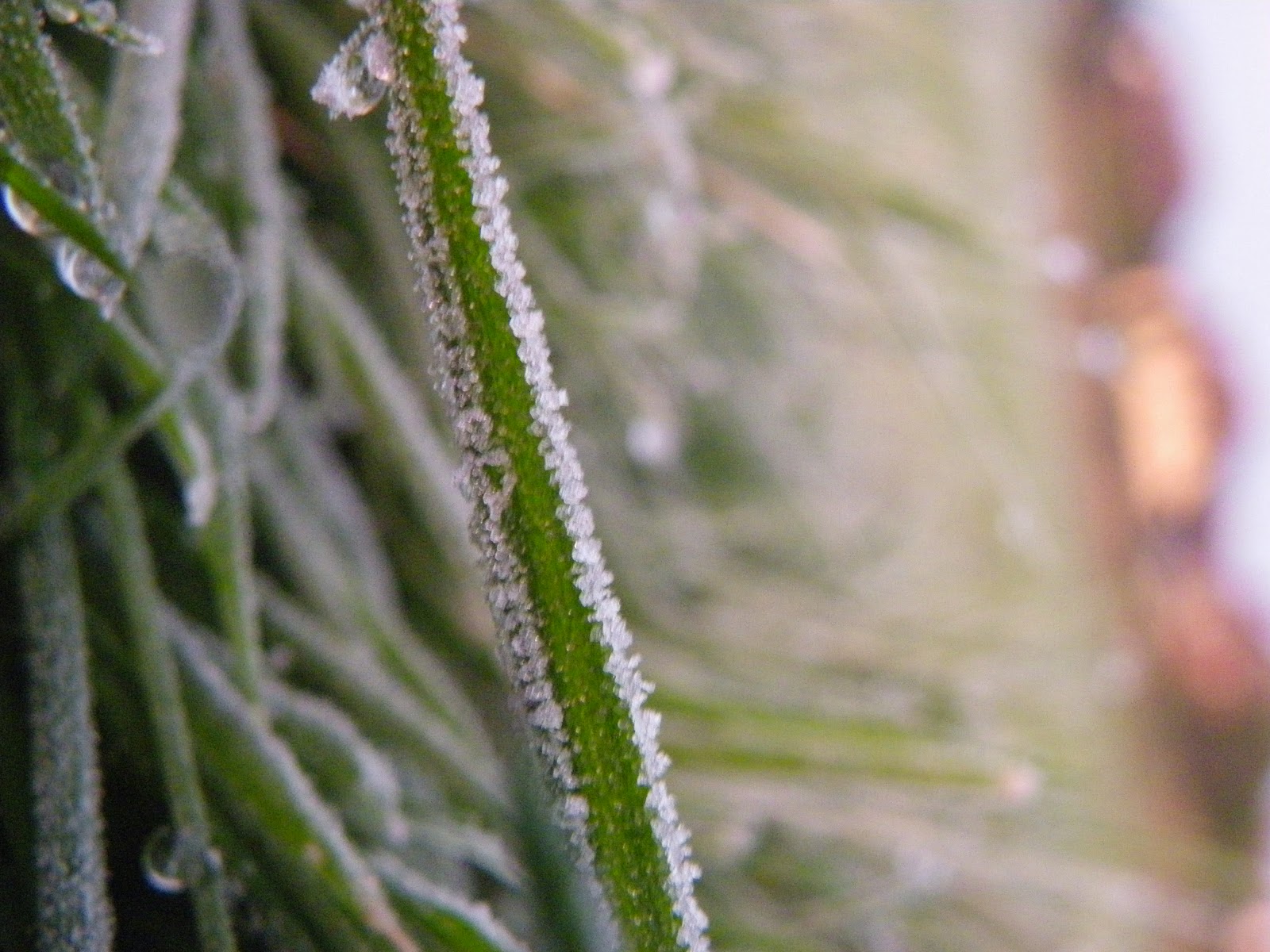
the first frosty morning at Seaford Head
sunrise over the patch

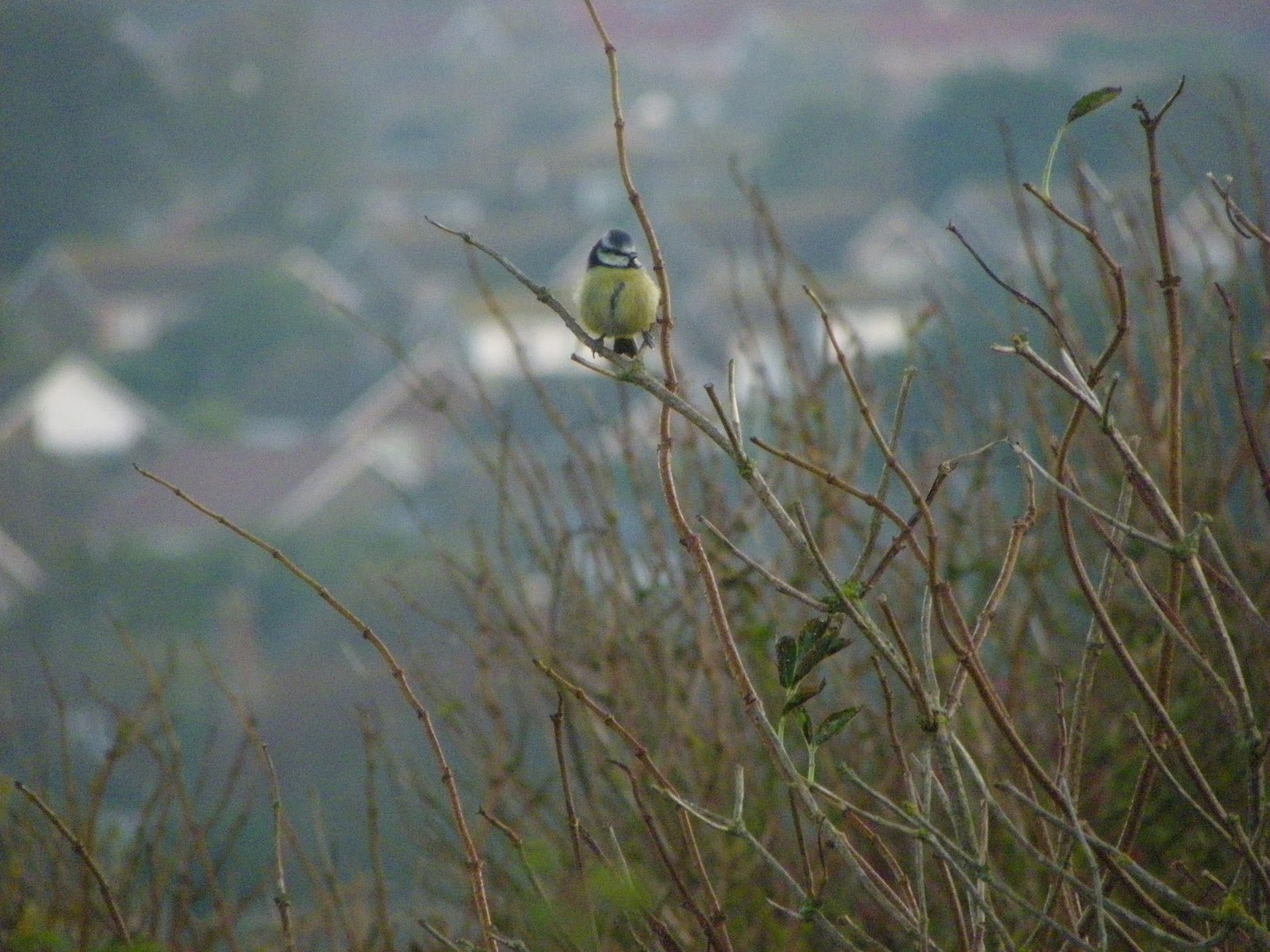
Blue Tit, on Seaford Head Golf Course

a group of Jackdaw on the fence running parallel to the Golf Course


 hundreds of Goldfinch were in this flock at Hope Gap!!!

Saturday, 6 October 2012

Passive Birding; Liam's update

don't think I'd forgotten you all!

The rather sad thing about sixth form is that school, homework and sleep do seem to take over large portions of your life. I'm expected to do 32 hours a week of work (16 in lesson and 16 out-of), which will understandably take a bit of a toll. So here's my notes on 'passive birding' from the last few days, the birds I've been seeing when I wasn't really birding...


  • Siskin are around in plentitude this October. The number for this morning is well into double-figures, as they pile over the house. I'd estimate maybe 70-80 for today, and probably a lot more going unrecorded!. They've been moving in decent numbers on Thursday/Friday as well. Other vismig includes still healthy numbers of Meadow Pipit, with a small stream all through the morning today perhaps mounting up to 50 or so. The vis-migging highlight has been at least one late YELLOW WAGTAIL, once again pushing back my last-of-year date for the species! 
  • Walking the dog today, it was apparent  that the october crests are coming through in force! probably 20 (mostly Goldcrests I expect) heard on a walk without binoculars, most just giving the 'shree-shree-shree' call that is very difficult to identify at the best of times. However, one obliging FIRECREST was in full song from a conifer on Blatchington Road, Seaford! There were also about 10 Chiffchaff on my regular dog-walking route. 
  • a few Jays around Seaford, though I've only ever seen one at a time at the moment. Nothing like the 270 that flew past Cley one day last week, and no where near as good as the 82 north over Newhaven on Thursday! If you were ever going to find a Nutcracker, this is the year! 

tomorrow will be a day out birding(all homework being done in one mad rush now!) for the morning at least. with the winds looking like they are from the N/NE overnight, maybe it's the day when a Yellow-brow will appear? Myself and Jake have a competition to find one, myself at Seaford Head, and him at Sheepcote Valley. and failing that, we'll just try and find the best bird we can! If any readers want to join us in that challenge, find a good spot for migration and see what you can spot! can you beat myself and Mr Gearty!?

and after that, the winds turn south-east on Monday! you have to face east to point to Mecca, and the winds ideally need to be south-east for our very own Mecca of sea-watching, Splash Point! By writing here, I make a commitment to all you lovely readers that I shall defy the early morning start, the following rush to get to school by 12:30, and the exhausted, unreceptive state I will find myself in throughout all my lessons, and find a shearwater or a sabine's!

good birding

Liam :-)  

Thursday, 4 October 2012

Mass migration as the sun comes out!

Jake again,

Decided what a better way to spend my after college hours than to walk from Lewes to Newhaven following the Ouse all the way along. Besides the Strong SW winds the birds didn't seem all that bothered! The river itself was incredibly high and so I wasn't expecting any common sandpipers but to my surprise one was happily bobbing up and down along a tiny stretch of mud happily feeding away! Plenty of swallows moving over head and the odd group of 3-4 wheaters using the fences that run along side the river as stopping points. The fields either side where very flooded and the local herons seem to be gathering as I counted about 10 in total during my walk, little egrets where also present in a few of the ditches to. A flock of swans flew in from the South and I had my fingers crossed they where early returning bewicks but alas just mutes. A small bunting caused me some confusion for a bit showing some characteristics of a little bunting but after going through some books I feel it was probably just a juv reed bunting also more wheaters. A buzzard flew ahead down river which got my attention on to a raven flying the opposite direction back towards Lewes, I assume this being one of the birds from the cliffs. As I approached Southease a stonechat flew up from underneath my feet and landed on a post in front giving lovely views. By this stage I had already counted about 40 meadow pipits going overhead and my wheater numbers must have been up to at least 20 but as I got over the Southease bridge both their numbers easily multiplied. The muddy area which runs all the way down to Newhaven was littered with birds, mainly meadow pipits, pied wagtails and wheaters. But with some checking I managed to pick out at least 10 yellow wagtails, 1 grey wagtail and a couple of possible green land race wheaters too. Today seem to be the day that everything was moving/ singing as during my walk I heard; willow warbler, chiff chaff, reed warbler, cettis warbler and a squealing water rail. The latter two birds I didn't even no lived in the area! As I approached Piddinghoe there was a flock of at least 15 yellow wagtails moving through briefly landing in one of the fields full of sheep, my highest number in a while. It all sort of went quiet as I approached the towns and the only other real bird of note was a group of 4 curlew at Newhaven Incinerator.

I'm pretty tired now, thanks for reading.

Wednesday, 3 October 2012

Real Birders are out No Matter the Weather!

An early start to school, and I was a free man today by 12:00! Lewes Railway Land beckoned me first. The afternoon's are never brilliant around here, but at least the weather was still nice, for the hour or so I was here! 

Birdwise- a small amount of vismig, with 7 Swallow, 4 Siskin, and singles of Meadow Pipit and House Martin heading south. there were still quite a lot of Robins (I'd guess 25), and 12 Chiffchaff. Plus 2 Treecreeper, a Jay, and a Kingfisher around the heart of reeds. Patch bird no.55 was heard only, 2 PEREGRINE calling distantly over the cliffs. I also saw the remarkable spectacle of a Speckled Wood flying into a spider's web, getting trapped and devoured, and then rolled up into a neat, silk-wrapped parcel. I chose the wrong day not to bring a camera! As I sat for 30 minutes waiting for the train, an estimated 300 hirundines passed over Lewes Station in a constant stream, seeming to consist primarily of Swallows.

On the way home I called into Newhaven, trying to relocate a Wryneck reported yesterday on RBA. I failed in this assignment, but there were a few good birds in the area;

  • a SHAG was offshore, fishing to the east of the pier about 100 metres o/s. My first in Sussex since 1 September 2011 surprisingly!
  • a small flock of waders flew down to bathe in the puddles immediately south of the industrial land, about 100 metres NE of Newhaven East Pier. They consisted of 17 Ringed Plover, 6 Dunlin and 2 Turnstone. Turnstone is a fairly unusual bird for Tide Mills in my experience, bizarrely I have only seen them here three times previously!
  • 2 Wheatear. One at Tide Mills showed a bright supercilium, long primary projection and uppright, dick's pipit like stance, typical of GREENLAND WHEATEAR (oenanthe oenanthe leucorrhoea), while one, perched on the viewing screen at the Ouse Estuary Project, looked a much more typical 'british' Wheatear. 
  • 1 YELLOW WAGTAIL, my latest ever and first ever record for October! it called three times as it headed over
However, whether it was worth the soul-chilling south-westerlies and the dismal rain is another matter! The highlight of the day was probably the GREENLAND WHEATEAR, great birds that still feel like a bit of a rarity, depsite being pretty regular. Slightly commoner stuff included 30 Lapwing and 20 Curlew, a handful of Gibbugs (Great Black-backed Gulls), my first Common Gull for a few weeks in Sussex, and a handful of Chiffchaff. The tide on Mill Creek was sadly too high for the Pectoral/Buff-breasted Sandpiper that hasn't arrived yet...

Monday, 1 October 2012

Subbuteo and Shovelers

The journey to school

Being observant on the train paid some fine dividends today. I generally don't see much, but having found Cattle Egret and Black Redstart along this train line before, I generally keep my eyes open just in case! and today it worked out, with a HOBBY over Newhaven Incinerator(hence the rather clever title!), powering on through the awful, awful conditions. My previous latest record was 25 Sep (2010, at Abbot's Wood), and it's always a great feeling to see one of the 'summer' migrants in October!

Also around, there were 40+ Redshank on Mill Creek at Newhaven Tide Mills, and a few Great Black-backed Gulls  (gibbugs for short), looking imperious as always around Newhaven Marina.


Patch Dedication...

is what I call it when you still find an hour to grill your patch despite the dismal rain! And it seemed these difficult flying conditions did ground a few migrants. 30 Robin, 25 Blackbird and 15 Chiffchaff made up the bulk, and 5 Goldcrest, 2 Blackcap and 2 Siskin added a little bit more quality. The true number of migrant Blackbird, Robin and Goldcrest is of course clouded over by resident birds, but considering the inflation in numbers (especially for the former two), I feel safe in saying that a fair number of the birds were continental migrants. To put it in context, the number of Robins was  over twice the number of resident Blue Tits I counted today (14), and both species were almost literally calling/singing out of every bush! The Siskin were a highlight today, being seen a few times among a roving flock of birds that included Blue, Great, Coal and Long-tailed Tits, Blackcaps, Chifchaffs, Chaffinches and Goldfinches! It's also the second time I've seen grounded migrant Siskin here, having found three among a Goldfinch flock on September 17th.  

thought it's not taken today, it's a picture. and it's kinda relevant...  

Other birds today included 5 Meadow Pipits and 3 Swallows SW. A far cry from the thousands of birds moving over at the weekend, but in conditions like this I didn't expect much of a vismig! Altogether more surprising, though, were 2 SHOVELER, also heading SW low overhead. These were an altogether not too bad 54th bird species I've seen on the patch since 10 September! In fact, when you consider it's an inland site with no wetlands, bar an embanked river and a few ditches, I'm rather happy with that total! other patch regulars today included 8 Magpie, a Green Woodpecker and 3 Treecreeper. And after an hour on the patch, with clothes and feel sodden, I went to school and sat watching the rain, in some odd way wishing I could be back out in it admiring my birds.